
Drone Window Cleaning: What It Is, How It Works, and Expectations
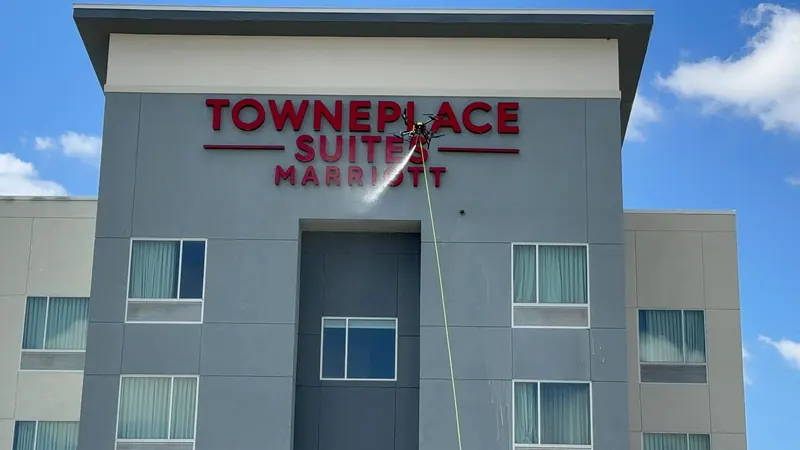
Drone window cleaning is replacing scaffolding, rope crews, and city permits for commercial properties across the United States. A two-person ground team sets up in 20 minutes, launches a drone, and cleans from the ground floor to the roofline with no one at height.
Picture the alternative. A 12-story office building needs clean windows. The scaffolding crew's quote comes back with a three-day setup, a city permit for street closure, and enough equipment to take the front parking lot offline for a week. Most property managers accept this as the cost of doing business. A growing number are choosing differently.
Commercial drone cleaning has moved well past the experimental stage. Operators have collectively generated over $75 million in revenue across more than 40 states, with the number of commercial properties using this service growing every year.
This guide covers what drone window cleaning is, how it works, which buildings it's right for, and what to expect on the day of the job. No jargon. Just what you need to make a good decision.
In this guide:
- What drone window cleaning is and how it differs from traditional methods
- How drones clean glass without scratching it
- Which buildings and property types are the right fit
- Safety and liability facts every property manager should know
- What a typical job looks like from setup to teardown
- Five questions to ask before hiring any drone cleaning company
What Is Drone Window Cleaning?
Drone window cleaning is a method of cleaning building exteriors using a remotely piloted drone equipped with water delivery systems and soft cleaning attachments. A certified pilot operates from the ground while the drone moves across each floor. No one climbs the building. No one leaves the ground.
The technology comes in two main setups. The first attaches a cleaning head directly to the drone, which makes contact with the glass using soft brushes and purified water. The second uses the drone to direct water onto the surface from a short distance, letting the pure water do the work without physical contact. Both are used commercially today, depending on the building and the cleaning task.
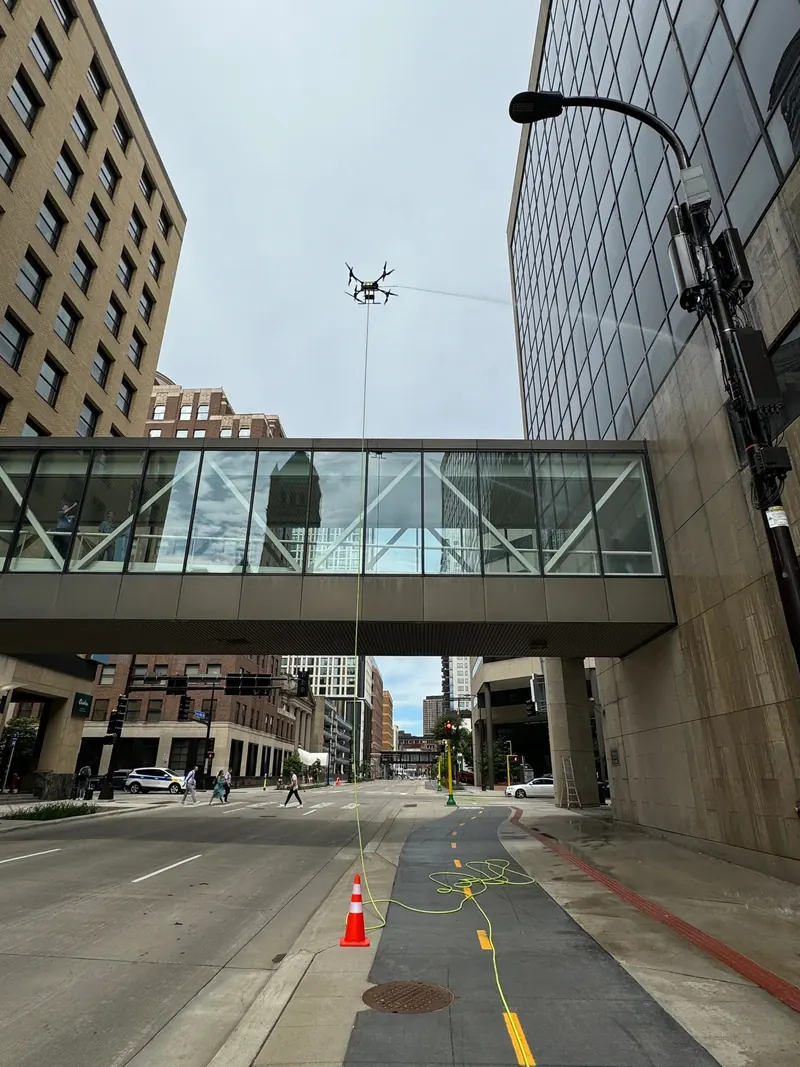
What separates this from traditional methods isn't just the equipment. It's the footprint. A typical drone cleaning job requires two people on the ground, a portable water filtration unit, and a clear operating zone. Compare that to scaffolding, which needs assembly crews, city permits, staging equipment, and often days of setup before a single window gets touched.
The commercial drone cleaning industry has moved well past the experimental stage. What started as a niche service is now a mainstream option across office towers, hotels, hospitals, and industrial facilities.
How Does a Drone Actually Clean Glass Without Scratching It?
Drones clean glass using deionized or reverse-osmosis purified water delivered through soft brushes or a controlled spray. Deionized water has had all its dissolved minerals removed. When it dries on glass, there is nothing left behind to form streaks, spots, or residue. The result is genuinely clean glass on every surface the drone reaches.
That's the key difference from ordinary cleaning. Tap water leaves streaks because of minerals. Calcium, magnesium, and other dissolved solids stay on the glass after the water evaporates. Deionized water contains none of those minerals, so when it dries, the glass is simply clean.
Here's how the process works on a typical job:
- A portable filtration unit on the ground processes water through a reverse osmosis and deionization (RO/DI) system
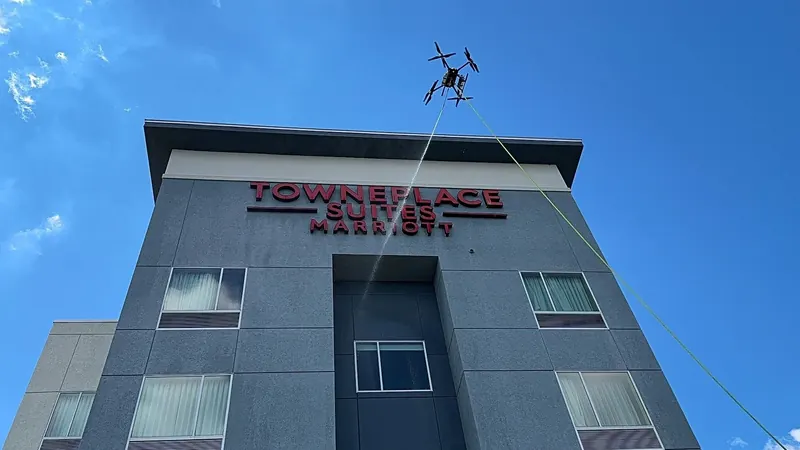
- Purified water travels up a lightweight hose to the drone
- The drone delivers it to the window surface through soft brushes or a controlled spray nozzle
- Dirt, dust, and surface pollutants lift off without scratching the glass or leaving residue
For positioning accuracy near glass, professional cleaning drones use GNSS and RTK (Real-Time Kinematic) technology. This gives the drone centimeter-level stability. It holds a consistent distance from the window without drifting into frames or seals.
The result is a streak-free, spot-free finish that is actually gentler on glass than some traditional squeegee methods, which can drag grit across the surface if the glass isn't pre-rinsed first.
What Buildings Is Drone Window Cleaning Right For?
Drone window cleaning works best on mid-rise to high-rise commercial buildings with large, unobstructed glass surfaces. Most commercial cleaning drones operate effectively up to around 150 feet above ground, covering buildings in the 5-to-15-story range. Hotels, office towers, hospitals, and condominium towers are the most common fits.
Beyond 150 feet, the water delivery hose and the drone's payload capacity become limiting factors. For taller buildings, a combination approach typically works best: drones handle everything within their operational range, and rope access or lift methods cover the upper sections. A site assessment determines the right split for your building.
Building types that are a strong fit:
- Office towers and corporate campuses
- Hotels and hospitality properties
- Hospitals and healthcare facilities
- Retail centers and mixed-use towers
- Educational campuses and government buildings
- Condominium towers with significant glass exteriors
FlyWash Drone has provided commercial window cleaning for Marriott Hotels, HCA Houston Healthcare, Saint John College, and Tanglewood Condominium. These represent the range where the service delivers consistent results: thorough coverage, no tenant disruption, and no parking or street impact.
Buildings with very narrow urban setbacks or highly ornate stone facades may need supplemental attention in certain sections. A site assessment identifies these areas before the job begins, so nothing is a surprise on the day of service.
Is Drone Window Cleaning Safe for Your Workers and Your Building?
Drone window cleaning eliminates the most serious risk in traditional exterior cleaning: working at height. The entire operation runs from the ground. No one ascends the building, no one hangs from a rope, and no one is exposed to a fall. Your site liability exposure for elevated work drops to zero.
Falls are the leading cause of fatalities in construction and building maintenance, according to OSHA. A single workers' compensation claim from a fall can cost hundreds of thousands of dollars. Drone cleaning removes that exposure entirely. The pilot stays on the ground throughout the job.
For the building itself, the soft brush and pure water combination protects glass, frames, and facade seals. No harsh chemicals are used in standard window cleaning operations. The deionized water system is non-toxic and leaves no chemical residue.
From a liability standpoint, always verify that any drone cleaning contractor carries:
- FAA Part 107 certification (required by law for all commercial drone operations in the United States)
- General liability insurance, with certificates available on request
- Workers' compensation coverage for the crew
FlyWash Drone's FAA Part 107 certified pilots carry full insurance on every job. Certificates are available before any work begins.
One point worth noting: drone cleaning is weather-dependent. High winds, rain, and extreme cold can make it unsafe to fly. A responsible operator reschedules rather than proceeding in conditions that compromise safety or results, and communicates that clearly in advance.
What Does a Drone Cleaning Job Actually Look Like?
Knowing the concept is useful. Knowing what happens when the crew shows up is what lets you plan around it. Here's what a typical FlyWash Drone job looks like, start to finish.
1. Site Assessment
The process starts before the job begins. The crew reviews the building's layout, window configuration, setback clearances, and any access restrictions. For most commercial properties, no city street closure permit is needed. The assessment also flags any sections that may benefit from supplemental ground-level cleaning.
2. Setup
The ground team arrives with the drone, a portable water filtration unit, and connecting hoses. Setup takes 15 to 20 minutes. The crew and equipment typically fit in a single parking space or a small section of sidewalk. There's no scaffolding to assemble, no boom lift to position, and no lanes to close.
3. Cleaning
The pilot launches the drone and begins systematic passes across the building's exterior, floor by floor. For a typical mid-rise commercial building, the cleaning phase takes a few hours depending on the total window area and the level of soiling. The ground crew monitors flight performance and water delivery throughout.
4. Documentation
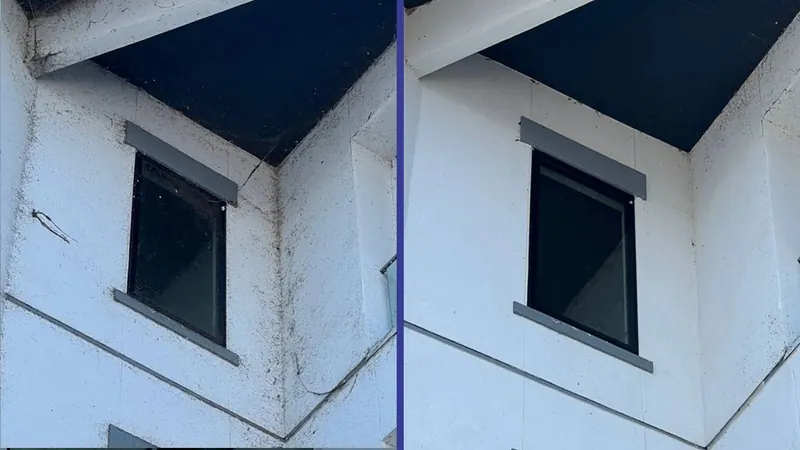
Before-and-after photos are taken for every job. This gives you a clear maintenance record and a visual reference for building ownership and tenants.
5. Teardown
Teardown takes about 10 minutes. No scaffolding to dismantle, no boom lift to return, no staging equipment to clear. The crew leaves the site exactly as they found it.
Total time on site for a typical mid-rise building is a few hours. Traditional scaffolding operations for the same building often run multiple days, not counting setup and teardown.
What to Ask Before Hiring Any Drone Window Cleaning Company
Before hiring any drone cleaning contractor, confirm FAA Part 107 certification, active general liability insurance, and documented references for your building type. These three checks rule out most under-qualified operators in the market today.
Not every operator is properly credentialed. Here are five questions that will tell you quickly whether a company is worth a second conversation.
1. Are you FAA Part 107 certified?
This is non-negotiable. FAA Part 107 certification is required by law for any commercial drone operation in the United States. An operator without it is flying illegally, and any incident on your property could expose you to liability. Ask to see the certification before any work begins.
2. Do you carry general liability insurance?
Ask for a certificate of insurance upfront. Reputable operators provide documentation without hesitation. If they stall or push back on this request, that's a warning sign.
3. Have you worked on buildings like mine?
Hotels, hospitals, and industrial facilities each have specific access requirements and surface sensitivities. Ask for references or past project examples relevant to your property type. Our service gallery shows the range of properties we've cleaned.
4. Do you have TWIC authorization if my site is industrial?
If your property is a refinery, maritime port, or other restricted-access facility, your contractor needs Transportation Worker Identification Credential (TWIC) authorization for unescorted site access. FlyWash Drone holds TWIC authorization and provides industrial cleaning services for these environments.
5. Do you provide before-and-after documentation?
Photo documentation of every job is standard practice for professional operators. It protects both sides and gives you a clear maintenance record.
Wrap up
Drone window cleaning is a proven option for commercial property managers dealing with tall buildings, busy tenants, and the cost and liability that come with traditional at-height cleaning methods. It's faster to set up, safer for everyone on site, and less disruptive from the first floor to the top of the building.
It's not the right fit for every situation. But for mid-rise commercial properties where disruption and safety are real concerns, it's one of the most effective exterior maintenance options available today.
If you want to know whether your building qualifies, a site assessment costs nothing. Check our full FAQ or reach out directly and we'll walk you through what's possible.
Frequently Asked Questions
How much does drone window cleaning cost for a commercial building?
Costs vary based on building height, total window area, surface condition, and service frequency. For a detailed breakdown of what drives commercial pricing, our drone window cleaning cost guide covers the key factors across different building types. The most accurate number for your property comes from a site-specific quote, which FlyWash Drone provides at no charge.
Can drones clean windows higher than 150 feet?
Most commercial cleaning drones operate up to around 150 feet due to equipment and payload limitations, including water delivery hose length and drone lift capacity. For buildings taller than this, a combination approach works best: drones cover the lower sections and rope access or lift equipment handles the upper floors. A site assessment determines the right split for your building.
What happens if weather conditions are bad on the scheduled cleaning day?
Drone cleaning is weather-dependent. High winds, rain, and extreme cold can make it unsafe or impractical to fly. FlyWash Drone monitors conditions ahead of every scheduled job and communicates proactively if a reschedule is needed. No job proceeds in conditions that would compromise safety or results.
Does drone window cleaning leave streaks or water spots?
No, when done correctly. The deionized water used in professional drone cleaning has had its dissolved minerals removed through RO/DI filtration. Because there are no minerals in the water, there is nothing left on the glass when it dries. Streaks and water spots are caused by mineral deposits from untreated tap water, which is not used in this process.
How often should a commercial building get its windows cleaned?
Most commercial property managers schedule exterior window cleaning two to four times per year. Buildings in high-traffic urban areas, near construction activity, or in dusty industrial zones often benefit from more frequent service. Hotels and healthcare facilities typically schedule quarterly or monthly cleanings to meet appearance standards for guests and patients.
Why FlyWash Drone
FlyWash Drone is a Houston-based exterior cleaning company that uses drone technology to service commercial and industrial properties across Texas and the United States. Every job is operated by FAA Part 107 certified pilots, and the company carries full general liability insurance with certificates available before work begins.
Beyond standard commercial properties, FlyWash holds TWIC authorization, which grants unescorted access to refineries, maritime ports, and high-security industrial facilities. This makes FlyWash one of the few exterior cleaning companies equipped to service properties that most contractors can't legally enter.
The company's client list includes Marriott Hotels, HCA Houston Healthcare, Saint John College, and Tanglewood Condominium. These are ongoing service relationships with organizations that hold their vendors to high standards for safety, documentation, and results.
FlyWash Drone serves properties throughout Texas and across the United States. Whether you manage a hotel, a hospital campus, or an industrial facility, the assessment starts with a conversation. Visit the services overview or reach out directly.
Ready to get a free quote for your building?
FlyWash Drone serves commercial properties across Texas and nationwide. No scaffolding, no street closures, no disruption to your tenants or guests. Tell us about your property and we'll put together a site-specific quote at no charge.
Request a Free Quote | View All Services
Call us: 1-877-FLY-WASH (1-877-359-9274)